Tel: 0086-15600895677
Email: asj001@anshiju.net


Tel: 0086-15600895677
Email: asj001@anshiju.net
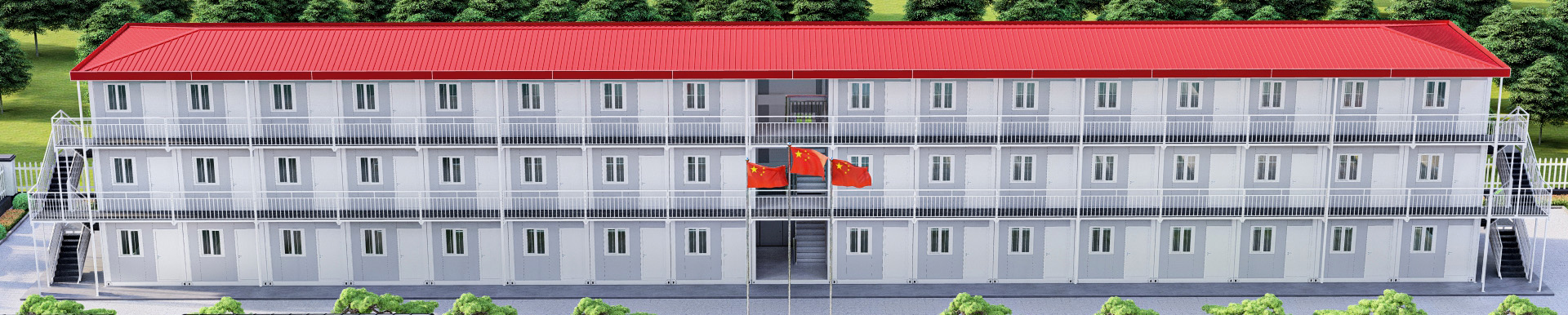
In recent years, modular container houses have witnessed explosive growth worldwide. From temporary buildings for engineering projects to characteristic residences for cultural tourism homestays, and then to temporary supporting spaces in cities, their application scenarios are constantly expanding, becoming a new wind vane in the construction industry. As a core category of modular buildings, why can container houses rise rapidly? What characteristics do their global application trends present?
Cost and efficiency advantages have become the core driving force. Compared with traditional brick-concrete buildings, the construction cost of modular container houses can be reduced by about 40%, and the construction period can be shortened by 25%-40%. Anshiju’s container houses are all prefabricated in the factory, and only simple assembly is required on site without on-site pouring and wall building. 2-3 workers can complete the installation quickly, realizing "install and use on the same day". At the same time, the transportation cost of container houses is much lower than that of traditional building materials, and the folding and expandable design further optimizes the transportation efficiency, making engineering projects in remote areas, rural homestays and other projects realize low-cost and rapid landing.
Sustainable and environmental protection concepts are in line with global development trends. Under the background of the global advocacy of "green buildings", the sustainable genes of modular container houses are highly favored. The main frame of the container house is made of steel, which can be 100% recycled, greatly reducing construction waste. The 75mm rock wool/EPS sandwich panel adopted by Anshiju is an environmentally friendly material with excellent thermal insulation performance, which can reduce the energy consumption of later use and reduce carbon emissions. At the same time, some high-end container houses can integrate solar power generation and rainwater collection systems to realize energy self-sufficiency, making the building more in line with the concept of "zero carbon" development.
Flexibility and adaptability unlock multi-scenario applications. The biggest feature of modular container houses is flexible and movable, customizable on demand. It can be freely combined, stacked and expanded according to the use needs, and can be used as a temporary dormitory for mines and camps, an on-site office area for engineering projects, or transformed into a characteristic homestay, a city Internet-famous store and an art studio. A variety of appearance and interior customization solutions launched by Anshiju make container houses get rid of the stereotype of "iron box", which can not only meet practical needs, but also take into account beauty and personalization, adapting to the aesthetic and functional requirements of different scenarios.
The surging global market demand brings broad industry development prospects. According to industry data, the global container house market scale continues to grow, and it is expected to reach about 1 trillion US dollars by 2032 with a compound annual growth rate of 6.7%. As a sub-category, the global market scale of folding container houses is expected to reach 3 billion US dollars by 2026 with a compound annual growth rate of more than 15%. North America and Europe have become the largest regional markets, and at the same time, the demand in Southeast Asia, Africa, the Middle East and other regions is also growing rapidly, mainly due to the rapid progress of engineering projects, the development of cultural tourism industry, and the increased demand for temporary housing and emergency buildings.
As a manufacturer deeply engaged in the modular container house industry, Anshiju keeps up with the global trends, continuously optimizes product performance, enriches product categories and improves service capabilities, providing global customers with container house solutions adapted to different scenarios. At a time when the construction industry is transforming towards "efficiency, green and flexibility", modular container houses are becoming an important development direction of future architecture with their unique advantages, and Anshiju will continue to help the development of the global modular building industry with innovation and quality.
Contact: Kevin
Phone: 0086-15600895677
E-mail: asj001@anshiju.net
Whatsapp:008615600895677
Add: Suzhou City,Jiangsu Province, China