Tel: 0086-15600895677
Email: asj001@anshiju.net


Tel: 0086-15600895677
Email: asj001@anshiju.net
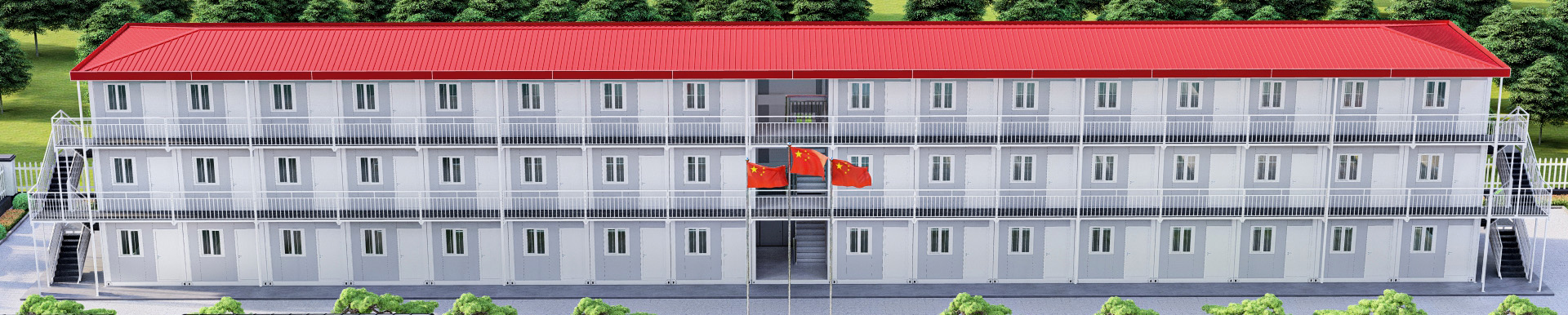
When it comes to construction site facilities, temporary offices, and prefab housing, the fast-assembly container house and the flat-pack container house are the two options people mention most. Buyers often ask the same questions: What exactly is the difference? Which one is more cost-effective? This article breaks down the two products across four dimensions — structure, transport & installation, cost, and applications — so you can choose with confidence before placing an order.
1. Structural Design
The flat-pack container house features a one-piece steel frame structure. Its six sides are made of whole panels welded or riveted into a sealed, rigid box, giving it excellent overall strength and wind and seismic resistance. The walls, roof, and floor typically use sandwich panels with EPS or rock wool cores, which deliver solid thermal insulation and soundproofing — a good fit for long-term use where comfort matters.
The fast-assembly container house, by contrast, is modular by design. Multiple independent standard modules are joined on site with high-strength bolts and dedicated connectors. Its biggest advantage is flexibility: modules can be combined freely like building blocks to suit different spaces and functions, and the walls and roof can be made of color steel, aluminum-plastic panels, fiber cement board, and other materials to match your budget and requirements.
2. Transport & Installation
For transport, the flat-pack house matches standard international container dimensions, so it can be shipped as a whole on a container truck or flatbed trailer without disassembly — a safe option for long hauls that protects interior fittings. The fast-assembly house can be broken down into modules for transport, taking up far less space and lowering shipping costs, especially for long distances or tight transport corridors; just be careful to protect the components from loss or damage in transit.
For installation, the flat-pack house is lifted into place by crane, anchored, and connected to utilities — a single unit can be ready within a few hours. The fast-assembly house needs to be pieced together and secured module by module; while still quick, it is a bit more involved, and a medium-sized project typically takes one to two days, requiring some experience to guarantee the quality of the joints.
3. Cost Comparison
On initial purchase, the flat-pack house costs more because of its more complex structure and higher manufacturing requirements. The fast-assembly house is cheaper to buy, which appeals strongly to budget-constrained projects.
Over the long run, the flat-pack house can last 15–20 years or more with minimal maintenance (mainly routine inspection), and it can be moved and reused after a project ends, spreading its cost over a longer service life. The fast-assembly house typically lasts 10–15 years, and its modular joints need more frequent inspection and upkeep, adding to later-stage costs.
4. Applications
Choose the flat-pack house for sites that demand safety, stability, and insulation over long periods — construction site offices and dormitories, field exploration camps, resort cabins. Choose the fast-assembly house for short-term projects that need flexible layouts — trade show booths, temporary event lounges, municipal sales centers — where it can be quickly erected, adjusted, and dismantled when the event ends.
5. Buying Advice
In one sentence: if your budget is tight, the project is short-term, and you value layout flexibility, go with the fast-assembly house; if you need durability and comfort over years of use, go with the flat-pack house. Before ordering, tell the manufacturer your expected service life, relocation frequency, local climate, and fire safety requirements so the proposal and quote match your real needs.
Contact: Kevin
Phone: 0086-15600895677
E-mail: asj001@anshiju.net
Whatsapp:008615600895677
Add: Suzhou City,Jiangsu Province, China