Tel: 0086-15600895677
Email: asj001@anshiju.net


Tel: 0086-15600895677
Email: asj001@anshiju.net
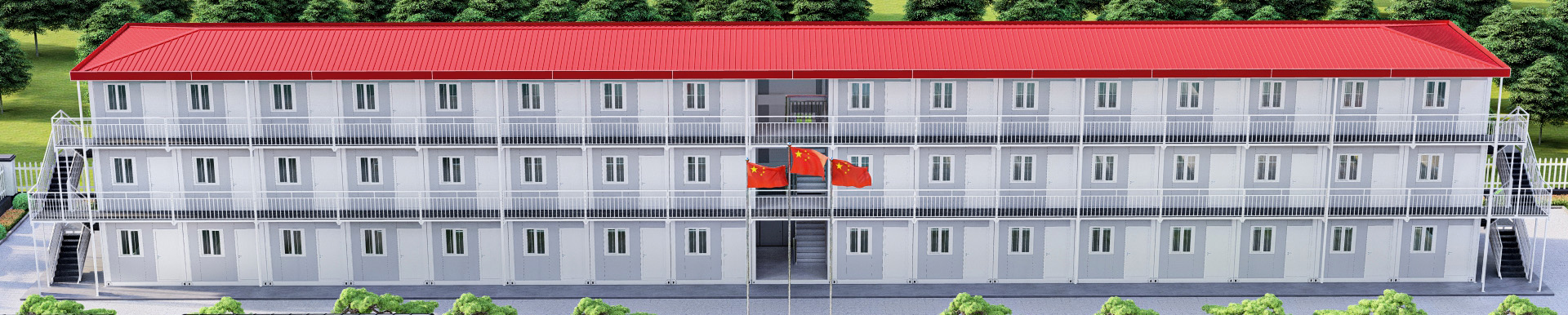
Across the world, housing shortages are becoming one of the most urgent challenges facing governments, developers, and communities. Rapid urbanization, population growth, rising construction costs, and limited land supply are putting immense pressure on traditional housing systems.
In many regions, conventional construction simply cannot keep up with demand. Projects take too long, costs continue to rise, and millions of people still lack access to safe and affordable homes.
This is where modular housing is emerging as a transformative solution.
Modular housing refers to buildings constructed in sections (modules) within a factory-controlled environment, then transported and assembled on-site.
Unlike traditional construction, where everything is built from the ground up on location, modular homes are largely completed off-site—often including interiors, plumbing, and electrical systems—before final installation.
This method significantly improves efficiency, consistency, and scalability.
One of the biggest advantages of modular housing is speed.
Traditional housing projects can take months or even years to complete. In contrast, modular homes can be manufactured and assembled in a matter of weeks, thanks to parallel processes—site preparation and module production happening simultaneously.
This rapid deployment is especially valuable in:
Urban housing shortages
Emergency housing needs
Government housing programs
Modular construction reduces costs in several ways:
Lower labor requirements
Bulk material purchasing
Reduced construction delays
Less on-site waste
Factory production allows standardization, making it easier to scale projects and deliver large quantities of housing units efficiently.
As housing affordability becomes a global concern, modular solutions provide a practical path to delivering more homes at lower costs.
Sustainability is another major driver behind modular housing adoption.
Because modules are built in controlled environments:
Material waste is significantly reduced
Energy efficiency is improved
Carbon emissions during construction are lower
Many modern modular homes also integrate:
Solar energy systems
Smart insulation materials
Water-saving technologies
This aligns well with global efforts toward greener construction and climate responsibility.
A common misconception is that modular homes are “box-like” and limited in design. In reality, modern modular construction offers high flexibility.
Projects can range from:
Single-family homes
Multi-story apartment complexes
Student housing and workforce accommodation
Luxury villas and resort units
Modules can be stacked, expanded, or reconfigured, allowing developers to adapt to different markets and land conditions.
Modular housing plays a critical role in:
Disaster relief housing
Refugee accommodation
Temporary or transitional housing
Units can be quickly produced, transported, and installed where they are needed most—providing safe shelter in record time.
This makes modular construction not just a commercial solution, but also a humanitarian one.
An important segment of modular housing is container-based construction.
By repurposing shipping containers into livable spaces, developers gain:
Strong structural integrity
Lower raw material costs
Faster conversion timelines
Container modular systems can be used for:
Affordable housing communities
Remote workforce camps
Student dormitories
Pop-up commercial spaces
This approach shifts the focus from “how expensive is housing?” to “how quickly can we deliver more homes?”
While modular housing offers clear advantages, it is not without challenges:
Regulatory approvals and building codes
Transportation and logistics costs
Market acceptance in some regions
Financing and mortgage limitations
However, as technology advances and governments begin to support modular solutions, these barriers are gradually being reduced.
The global housing shortage requires solutions that are:
Fast
Scalable
Cost-effective
Sustainable
Modular housing meets all of these criteria.
While it may not be the only solution, it is undoubtedly one of the most practical and impactful approaches available today.
As adoption continues to grow worldwide, modular construction is set to play a key role in reshaping how we build—and how people live.
The demand for housing is not slowing down—but with modular construction, the industry finally has a way to respond at scale.
By combining speed, efficiency, sustainability, and flexibility, modular housing offers a smarter path forward for governments, developers, and communities alike.
The question is no longer whether modular housing works—
but how quickly it can be implemented to meet global demand.
Contact: Kevin
Phone: 0086-15600895677
E-mail: asj001@anshiju.net
Whatsapp:008615600895677
Add: Suzhou City,Jiangsu Province, China