Tel: 0086-15600895677
Email: asj001@anshiju.net


Tel: 0086-15600895677
Email: asj001@anshiju.net
The Maldives. 1,192 coral islands. Average elevation: 1.5 meters above sea level.
From Malé International Airport, you board a speedboat and bounce across the Indian Ocean for three hours before you spot it: an atoll so remote that even local fishermen rarely stop there.
In the fall of 2024, a Singaporean investor secured a 50-year lease on this speck of sand. His plan wasn't a guesthouse. It was a collection of overwater luxury villas.
Then reality hit. On this island, every single liter of fresh water had to be shipped in from Malé. Sand was free—the island was made of it. But cement, rebar, bricks, glass? Every kilogram had to spend hours on the open sea.
"The first time I saw the transport quote," he told me later, "I thought the logistics company had misplaced a decimal point. I was wrong. It was exactly what it said."
His first instinct was to replicate a Balinese timber villa. The designs were drawn. The renderings looked spectacular. Then he showed the plans to a Chinese freight forwarder who had spent a decade in Malé.
The forwarder asked one question: "Your island doesn't have a jetty. How are you planning to unload timber beams?"
Silence.
He then spent weeks researching how existing high-end Maldivian resorts had actually been built. Nearly every one had endured the same nightmare: materials soaked in seawater, construction crews stranded waiting for supply boats, entire seasons lost to monsoons.
He ran the math. If he went the traditional route—20 guest rooms, from groundbreaking to grand opening—it would take at least eighteen months. And his lease payments had started on day one of signing.
Eighteen months of zero revenue. The rent alone would have bought him two more islands.
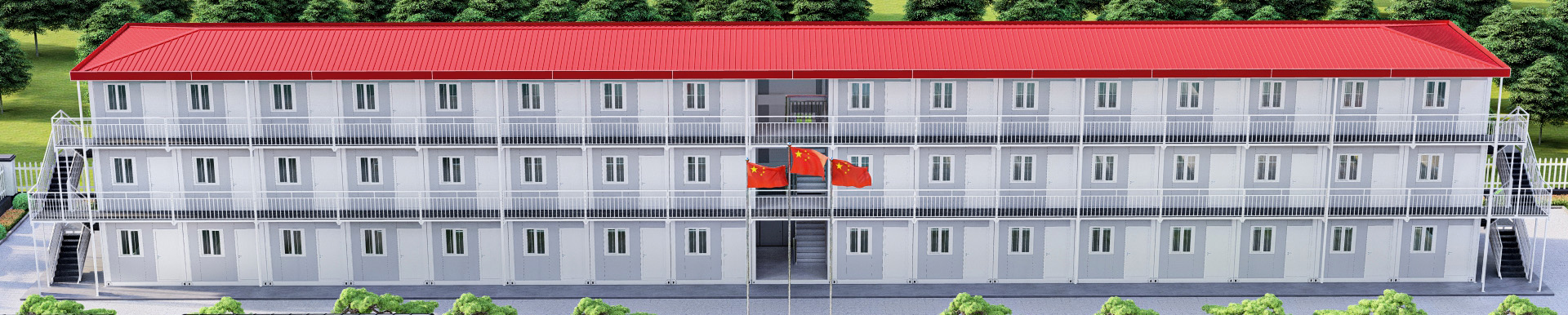
The turning point came at the Canton Fair. In an unremarkable booth, he watched a worker repeatedly assemble and disassemble a detachable container house using nothing but a wrench.
The sales rep told him: "Knock-down shipping. Seventeen units per 40HQ container. All you need is level ground."
He asked only two questions: Can it withstand salt-laden sea wind? Can it be built without cement?
Both answers: Yes.
Two months later—15 days of factory production, plus 18 days of ocean freight from Shanghai Port—a single 40HQ container cleared customs in Malé. It was then split across a dozen small speedboats and ferried, load by load, toward an atoll with no dock.
In the Maldives, you cannot hire skilled construction workers from another island, because no other island has them either.
His "crew" consisted of three people: two Europeans working as dive instructors at a nearby resort, and a local Maldivian guy whose day job was shuttling guests around on a speedboat.
Not one of them had ever laid a brick. Not one had handled rebar. It didn't matter—the detachable container house didn't ask them to.
Every connection point was pre-engineered at the factory. Bolt holes in the columns. Locating pins on the top beams. No measuring. No cutting. No welding. Align, insert the bolt, tighten. Repeat that sequence a hundred times, and a villa stands.
From the first column of the first unit to the last window of the twentieth: 19 days of on-site assembly.
Nineteen days. In the Maldives, using traditional methods, nineteen days might not even get you past digging the sand for the foundation.
The dive instructor later posted on Instagram under the hashtag #thisismynewsidehustle, with a photo of himself tightening the last bolt at sunset.
The scariest enemy of island architecture isn't typhoons. It isn't monsoon rain. It's salt.
The Maldives' southeast monsoon carries a fine salt mist that can turn bare steel rust-brown overnight. Without anti-corrosion treatment, connection points seize up within three years, and structural strength begins to fail within five.
That's why the base beams and main columns are hot-dip galvanized steel—not spray-painted, but genuinely submerged in molten zinc. Salt spray can't penetrate it, because the zinc has already formed a dense layer of carbonate protection on the metal surface.
The wall panels are 50mm rockwool sandwich panels, with color-coated steel on both sides. Even with humidity sitting above 85% year-round, mold has nowhere to take root.
A detachable container house in the Maldives won't last a hundred years. But five to eight? Easily. For a 50-year lease, that means at least four renovation cycles and six generations of guests.
Contact: Kevin
Phone: 0086-15600895677
E-mail: asj001@anshiju.net
Whatsapp:008615600895677
Add: Suzhou City,Jiangsu Province, China