Tel: 0086-15600895677
Email: asj001@anshiju.net


Tel: 0086-15600895677
Email: asj001@anshiju.net
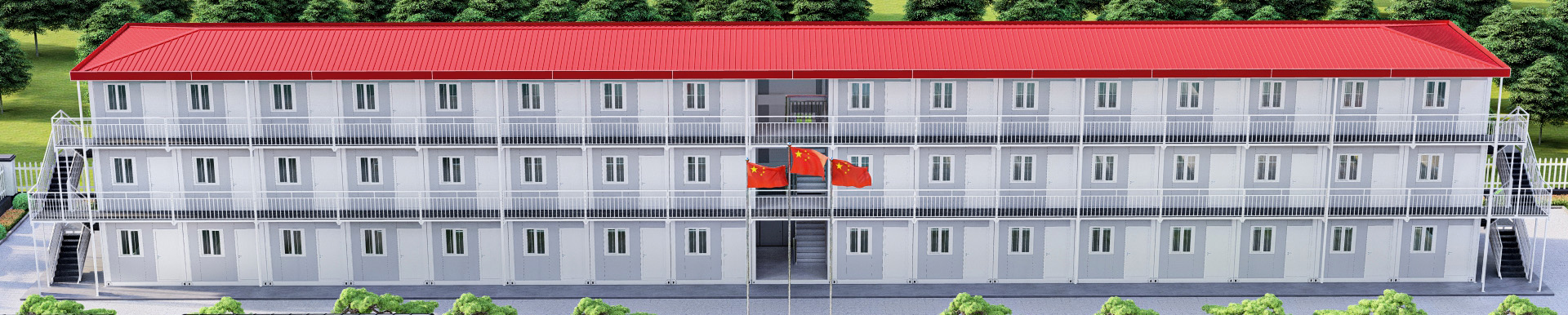
Djibouti. The Horn of Africa. Where the Red Sea meets the Indian Ocean.
In the spring of 2025, a Chinese engineering team won a port expansion contract here. The mission: build a camp for 200 workers on a patch of coastal desert—in three months.
The project manager, Lao Zhou, didn't reach for the blueprints when he got the assignment. He opened Google Maps.
Between the Djibouti port and the job site lay 450 kilometers of inland road. The asphalt had been pulverized years ago by overloaded mining trucks. During the rainy season, it became a mud pit. During the dry season, dust clouds swallowed entire convoys.
Zhou stared at the route, then told headquarters: "Shipping cement, rebar, and a construction crew out there will cost more than buying three apartment buildings back home."
Zhou tried the local approach first. He hired seven or eight workers in Djibouti City, promised solid wages, covered food and lodging.
It fell apart on day one.
The guys unloading building materials stacked steel rebar on top of aluminum window frames. A gust of wind knocked the whole pile over. When he asked someone to mix mortar, the ratio of cement to sand was entirely by feel—one batch thin as soup, the next thick as mud.
Zhou later reflected: "They weren't stupid. They'd just never done this work before. Asking a camel herder to weld steel—he wasn't afraid of sparks in his eyes. He was afraid he'd burn your building down and you'd make him pay for it."
After one week, he made a brutal call: scrap the original plan. No more traditional panel barracks. Switch to detachable container houses.
Here's the real killer feature of the detachable container house—not the frame thickness, not the wall insulation. It's that you can fit 17 units into a single 40HQ container.
Zhou ran the numbers himself. With traditional welded panel barracks, packing all the steel sheets, welding rods, rivets, cement, and paint meant maybe four or five units per container. The rest would need a second trip. Then a third. Each trip: 450 kilometers. Fuel, tolls, parts that break along the way—the losses kept him up at night.
But the detachable approach? Seventeen units. One container. One trip.
He told me later: "I didn't choose the container house. Djibouti's 450 kilometers of broken road chose it for me."
Djibouti is one of the hottest non-desert countries on the planet. In summer, the ground surface hits 48°C. Even at night, it barely dips below 30. Without air conditioning, sleeping is a fantasy.
Zhou's biggest worry: if 17 container houses turned into solar ovens, how long before his 200 workers couldn't take it anymore?
But the walls aren't thin sheet metal. They're 50mm rockwool sandwich panels with a thermal conductivity of roughly 0.040 W/(m·K)—heat seeps through at a fraction of the speed you'd expect.
Zhou did his own side-by-side test. At the same midday hour, a nearby sheet-metal tool shed hit 53°C inside. His office container? Only a few degrees warmer than it had been in the morning. Flip on a wall-mounted AC unit, and the temperature stabilized fast.
"I never believed a wall panel could make that kind of difference," he admitted. "Then my workers told me the AC power bill was lower here than at our last domestic site. I checked the meter for a solid week. They weren't lying."
The port expansion was a three-year contract. After three years, the crew pulls out—but can the housing come with them?
Traditional barracks can't be moved. The concrete bases are poured. The foundations are dug. Peel off the wall panels and they crumble into debris. Zhou knows plenty of overseas project veterans—every single one has a story about a camp they couldn't dismantle, left to rot on-site.
The detachable container house does it differently. Unbolt the ground beams. Remove the wall panels. Pack them back into the container—the same container they arrived in.
Zhou calculated: those 17 units could be resold to the next project team right there in Djibouti. Or loaded up and shipped to his company's next contract in Ethiopia. Either way, he'd essentially gotten three years of housing for free.
"In overseas engineering," he said, "the nightmare isn't the work. It's walking away while your assets stay behind and decay. The container house kicked that problem out the door."
Contact: Kevin
Phone: 0086-15600895677
E-mail: asj001@anshiju.net
Whatsapp:008615600895677
Add: Suzhou City,Jiangsu Province, China