Tel: 0086-15600895677
Email: asj001@anshiju.net


Tel: 0086-15600895677
Email: asj001@anshiju.net
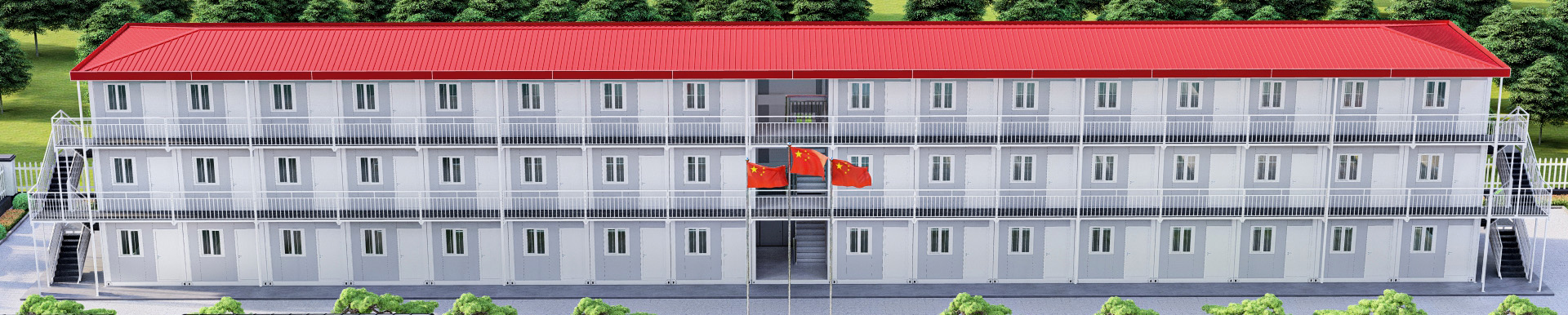
July 14, 2026 — Suzhou, China — Salar de Uyuni. Bolivia. Altitude: 3,656 meters. The largest salt flat on Earth.
A Hollywood location scout stood on the blinding white crust and knew the director would approve. Then the production manager asked the real question: where do 200 crew members sleep?
The nearest town was four hours on unpaved roads. A traditional camp meant importing cement and a construction crew to 3,600 meters, with a timeline of four months minimum. The studio's shooting window was three.
Three containers from Shanghai. But the journey began earlier.
Suzhou factory: two weeks. Forty-two X-folding units completed on the production line. Frame welding, 304 stainless steel hinge assembly, 50mm rockwool panel filling, electrical pre-wiring, waterproof testing. Each unit was fully assembled and tested as a complete room, then folded flat along its hinge track.
Ocean freight: five weeks. Three 40HQ containers—14 units each—crossed the Pacific, landed at a Chilean port, then climbed 1,200 kilometers by truck into the Bolivian highlands.
Salt flat deployment: five days. Eight local workers. One small crane. Release the clamps, push outward, and the walls and roof swing open along the stainless steel X-hinges in one synchronized motion. Lock the bolts. Repeat forty-two times.
A miniature town of makeup trailers, production offices, crew quarters, and a cafeteria appeared on the salt crust. From Suzhou factory order to first occupancy: under three months. Traditional construction would still be curing concrete at that point.
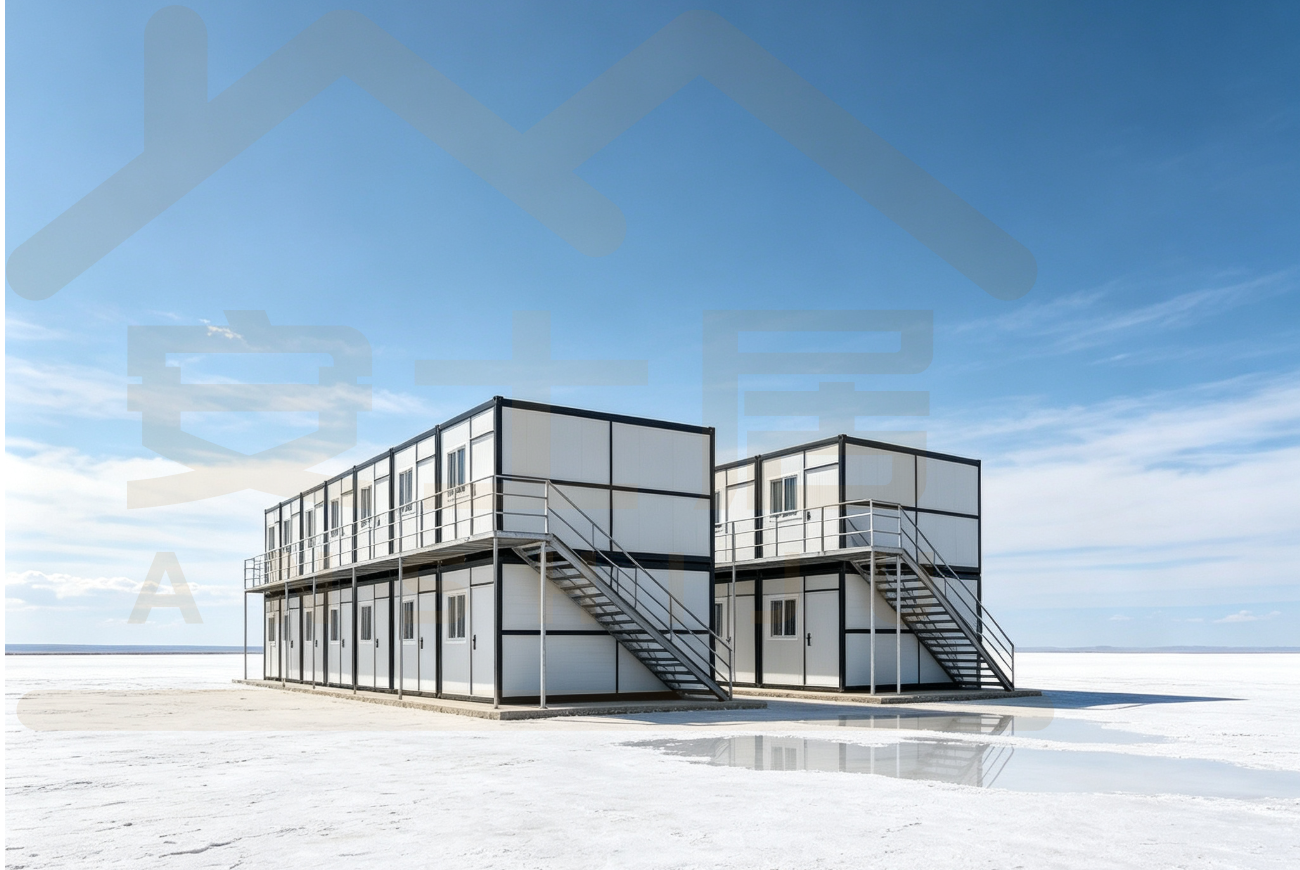
The Bolivian altiplano wind carries microscopic salt dust that turns ordinary steel to rust in weeks. The X-hinges are 304 stainless, tested through 1,000 fold cycles. The frame is hot-dip galvanized. Every seam is sealed with EPDM gaskets.
The studio's safety inspector, a twenty-year mining camp veteran, examined the hinges for an hour. "I've condemned prefab buildings that looked newer than this. These aren't prefab. These are machines."
When filming ended, the units reversed their journey. Bolts removed. Walls folded back along the same hinges. Forty-two rooms became forty-two flat panels. Three containers again. Shipped across the Atlantic to Ouarzazate, Morocco—the Sahara's film studio complex—where they became another production's desert base camp.
Two continents. Two films. The same forty-two rooms. Zero demolition.
The line producer calculated that over the projected lifespan, these units would cost less per room per shoot than renting portable trailers for a single season.
Anshiju container House(suzhou)co.,ltd, Suzhou, China.
Contact: Kevin
Phone: 0086-15600895677
E-mail: asj001@anshiju.net
Whatsapp:008615600895677
Add: Suzhou City,Jiangsu Province, China