Tel: 0086-15600895677
Email: asj001@anshiju.net


Tel: 0086-15600895677
Email: asj001@anshiju.net
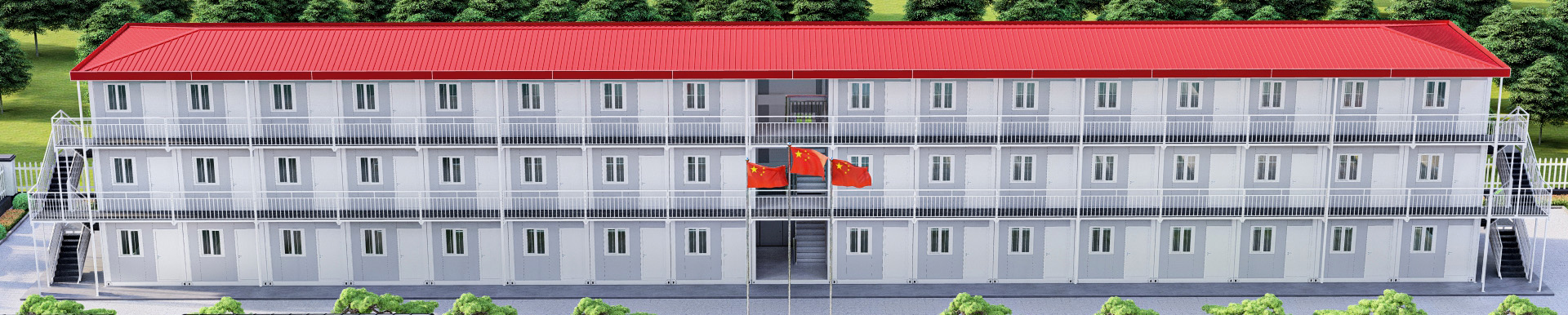
In the field of architecture, container houses are leading an innovative transformation. Currently, the global housing crisis and energy challenges coexist. Traditional buildings have high energy consumption and large carbon emissions, while container houses, with their unique advantages, have become a new solution to these problems.
From an environmental perspective, container houses can be regarded as a model of circular economy. Their material recycling rate is as high as 98%, and a single 40-foot container can reduce 3.5 tons of steel consumption and carbon emissions are 65% lower than those of traditional buildings. The Q355B low-alloy high-strength steel used undergoes hot-dip galvanizing treatment, with a corrosion resistance period exceeding 20 years. After retirement, 95% of the components can be reused through reinspection and reutilization, fully aligning with the global dual-carbon strategy.
The delivery speed is also a major highlight of container houses. Relying on a 95% ultra-high prefabrication rate, an "factory prefabrication + on-site assembly" efficient model has been achieved. For example, the Ibis Hotel project in Perth, Australia, completed the delivery of a 17-story building in just 4 months, reducing the traditional construction period by 60%; the container apartment in Amsterdam, the Netherlands, even set a record of completing three layers of assembly in 72 hours. With the BIM + 5G collaborative construction system, the hoisting and positioning of a single module only takes 28 minutes, ensuring that global projects can respond within 48 hours and be delivered within 15 days.
In terms of application scenarios, container houses are constantly expanding their boundaries. In post-disaster resettlement, its advantages are fully demonstrated. After the fire in Hong Kong Tai Po Hongfu Estate, container houses quickly provided transitional housing for the affected residents. Its installation speed is fast, with an average of 4 workers completing the installation of a single container in 3 hours; it is sturdy and durable, capable of withstanding harsh weather, with a lifespan of over 15 years; the cost-effectiveness is significant, with construction costs significantly lower than traditional buildings, and transportation and installation are also extremely convenient. Moreover, container houses are widely used in construction site barracks, outdoor operation barracks, municipal resettlement buildings, and various commercial buildings. In tourism projects, it attracts tourists with its unique industrial aesthetics, such as the container hotel in Whale Bay, South Africa, which uses a cantilever design to create full sea-view suites, with an average room rate of $800 per night, and the occupancy rate still remains at 92%.
Technological progress also empowers container houses. Nowadays, some modern designs incorporate Internet of Things technology, achieving functions such as automated temperature control and energy management, greatly enhancing the living experience. Moreover, container houses can be integrated with renewable energy systems such as photovoltaics and energy storage, such as the 200 container roofs of the living area of a certain photovoltaic power station in Gansu Province, integrating monocrystalline silicon photovoltaic panels, with an annual power generation of 250,000 kilowatt-hours, meeting 60% of daily electricity demand.
As the industry develops, more and more enterprises are getting involved, driving container houses towards more economical, efficient, and environmentally friendly directions. It is believed that in the future, container houses will occupy a more important position in the construction market, providing people with more high-quality and diverse living and usage options.
Contact: Kevin
Phone: 0086-15600895677
E-mail: asj001@anshiju.net
Whatsapp:008615600895677
Add: Suzhou City,Jiangsu Province, China